
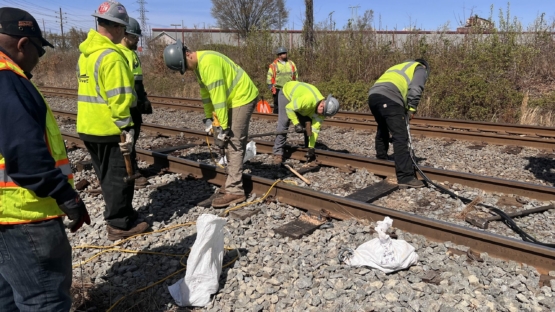
State Safety Oversight

Safety Management Systems and PTASPs
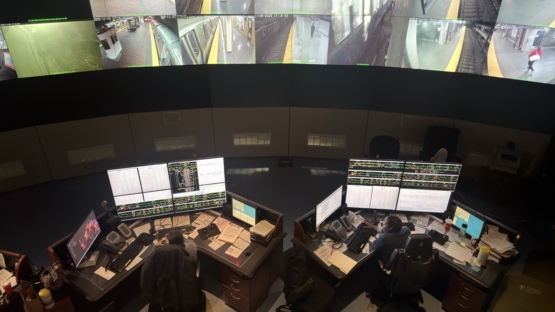
Every day, TRA helps clients transition from older forms of safety oversight and assessment to the current SMS model. We create workable plans our clients use to move forward towards fully compliant SMS in their organizations.
Workforce Training
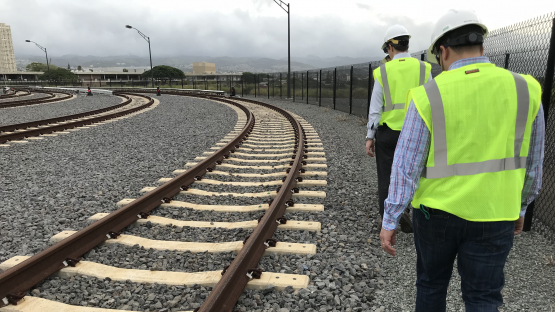
Safety Certification Support
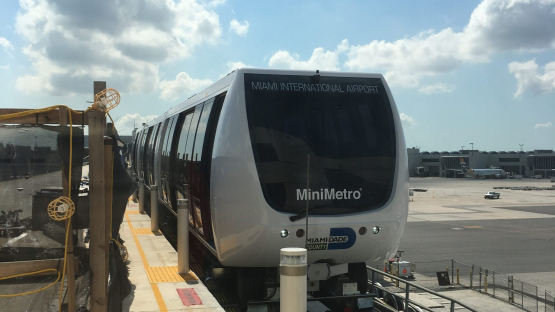
Our Services
TRA’s transportation safety services go beyond compliance, we help organizations build and sustain a culture of safety. Our team brings decades of experience in transportation safety risk analysis, program design, and stakeholder engagement, ensuring that every project is grounded in best practices and regulatory excellence.


Frequently Asked Questions
TRA’s transportation safety consulting provides agencies with specialized expertise to build, audit, or strengthen the safety programs that govern their rail, bus, and multimodal operations. Transit agencies may engage a consultant when they encounter new regulations or regulatory audit findings, undertake a major capital project that needs safety certification or configuration management revision, or experience a leadership change that triggers a program review. Some agencies simply need to bring an independent expert in to verify if their safety program is best in class or if improvements are needed.
TRA’s consultants supplement in-house staff with experience across multiple agencies, which is valuable for interpreting ambiguous regulations and benchmarking against peers. A good consulting provides a practical path forward consisting of actionable processes that keep your agency compliant long after the engagement ends.
A Safety Management System is a formal, organization-wide approach to managing safety risk through four pillars: safety management policy, safety risk management, safety assurance, and safety promotion.
Under 49 CFR Part 673, the Federal Transit Administration (FTA)’s PTASP rule requires most recipients of FTA Urbanized Area Formula Grants and all rail transit agencies under State Safety Oversight to implement SMS and document it in an Agency Safety Plan. SMS shifts agencies away from reactive, compliance-only safety toward proactive hazard identification and data-driven mitigation.
Agencies that embrace SMS principles and embed SMS into daily operations, rather than treating it as a paperwork exercise, typically see fewer incidents, stronger audit results, and more defensible decisions.
The PTASP regulation under 49 CFR Part 673 applies to operators of public transportation systems receiving FTA Section 5307 Urbanized Area Formula Grant funds and to all rail transit agencies subject to State Safety Oversight. Small public transportation providers, generally those with 100 or fewer vehicles in peak service and no rail, may have their plan developed by their state DOT on their behalf, though they can opt to develop their own.
Each plan must be reviewed, updated, and self-certified annually. Commuter rail governed by the Federal Railroad Administration and passenger ferries regulated by the U.S. Coast Guard are excluded from PTASP requirements.
Transit safety certification is the formal process agencies use to verify that new or modified rail lines, stations, vehicles, and systems are safe to enter passenger service. It typically begins during preliminary engineering and runs through revenue service, capturing hazard analyses, design reviews, test results, training records, and operational readiness checks in a Certifiable Items List.
A safety certification program shows regulators, boards, and the public that every safety-critical element has been designed, built, tested, and accepted before opening day. When agencies treat certification as a continuous process rather than a last-minute audit, they catch issues earlier, reduce delays, and protect the reputations of the engineers and executives who sign off.